Document Summarizer
Project Details
- Conducted Primary Research
- Designed the Lo-Fi prototype
- Conducted Prototype Evaluations
- Created the final User Interface
Overview
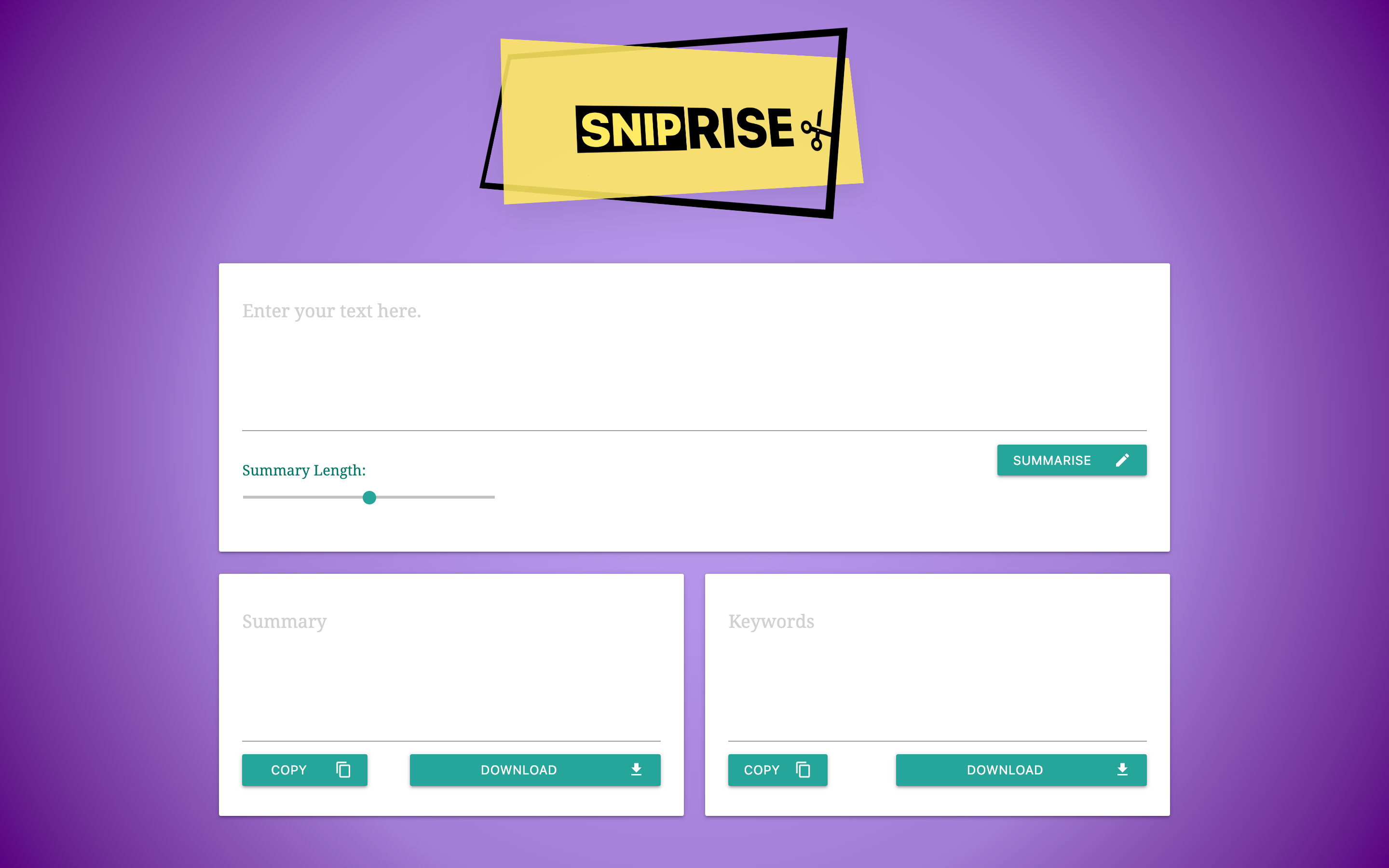
Inspired by our college's initiative to promote self-learning, my teammate and I decided to create a tool to help engineering students study their courses. Our final project, SnipRise, also won second place for Innovative Projects in May 2019.
Research
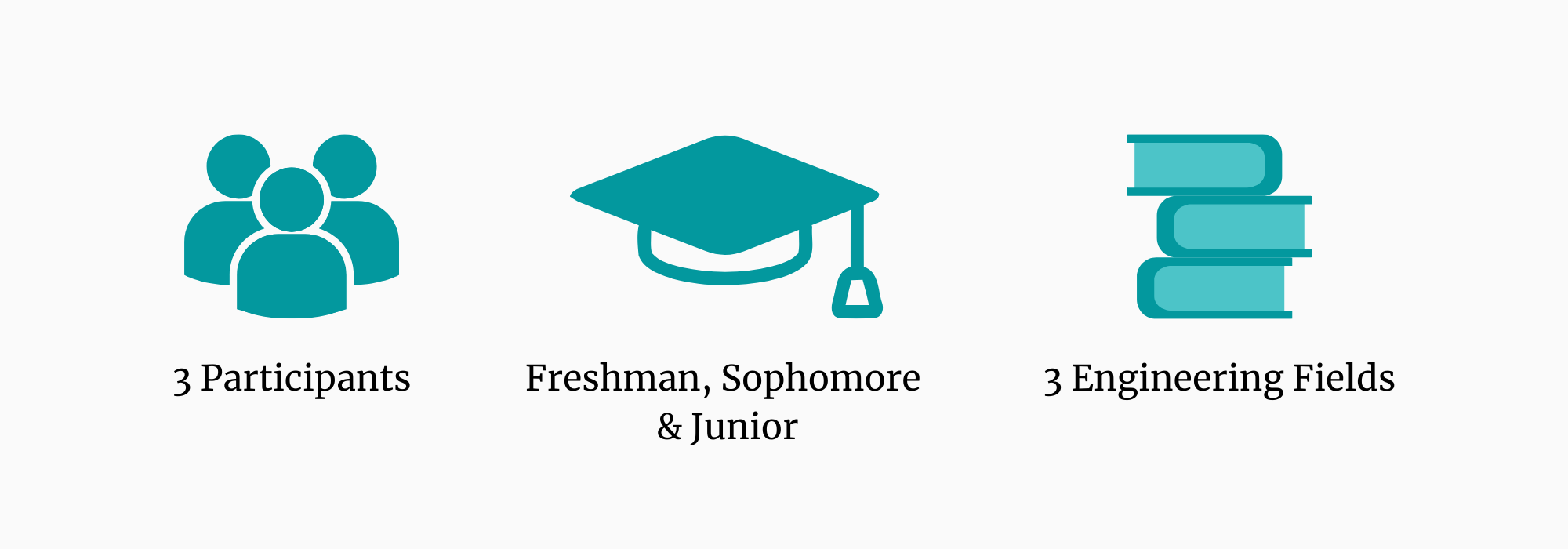
First, I conducted fifteen-minute semi-structured interviews with engineering students of varying education levels and fields to understand the common issues they face with learning - both the process and the tools.
The responses revealed that participants often feel overwhelmed by long-form content and the learning software available to them.
“I don't like that there are so many options with software, makes it harder to learn.”
“Why are learning tools so dull-looking?”
“It's not that the content is hard. It's too long, wish we could just shorten it somehow.”
– Interview Participants
The Problem
Although this research was brief, it suggested that students struggle with learning large amounts of information and face issues with complicated software.
Ideation
Due to limited time, Piyush and I focused on shortening content through summary generation and keyword identification. We also made the decision to include the following features.
1. Comma-Separated Keyword List
2. Copy Button for Both Keyword List & Summary Sections
3. Download Button for Both Keyword List & Summary Sections
Design, Test, Iterate
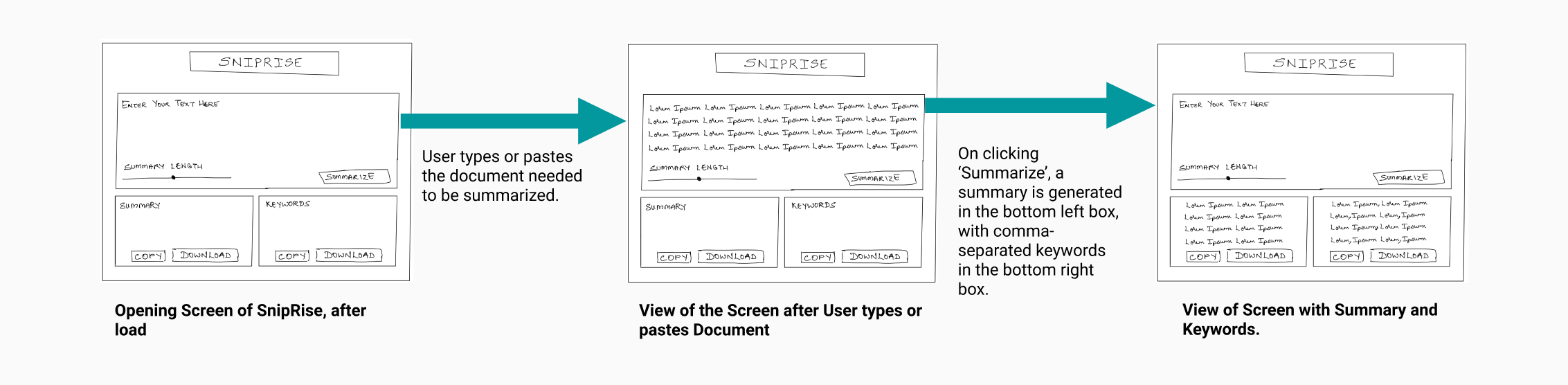
From there, I started creating a low fidelity prototype for SnipRise. We chose to develop SnipRise for laptops since our research showed that students prefer to study mainly using their laptops. I first focused on creating the screen layout. During this process, I came up with another feature to let users choose the summary length.
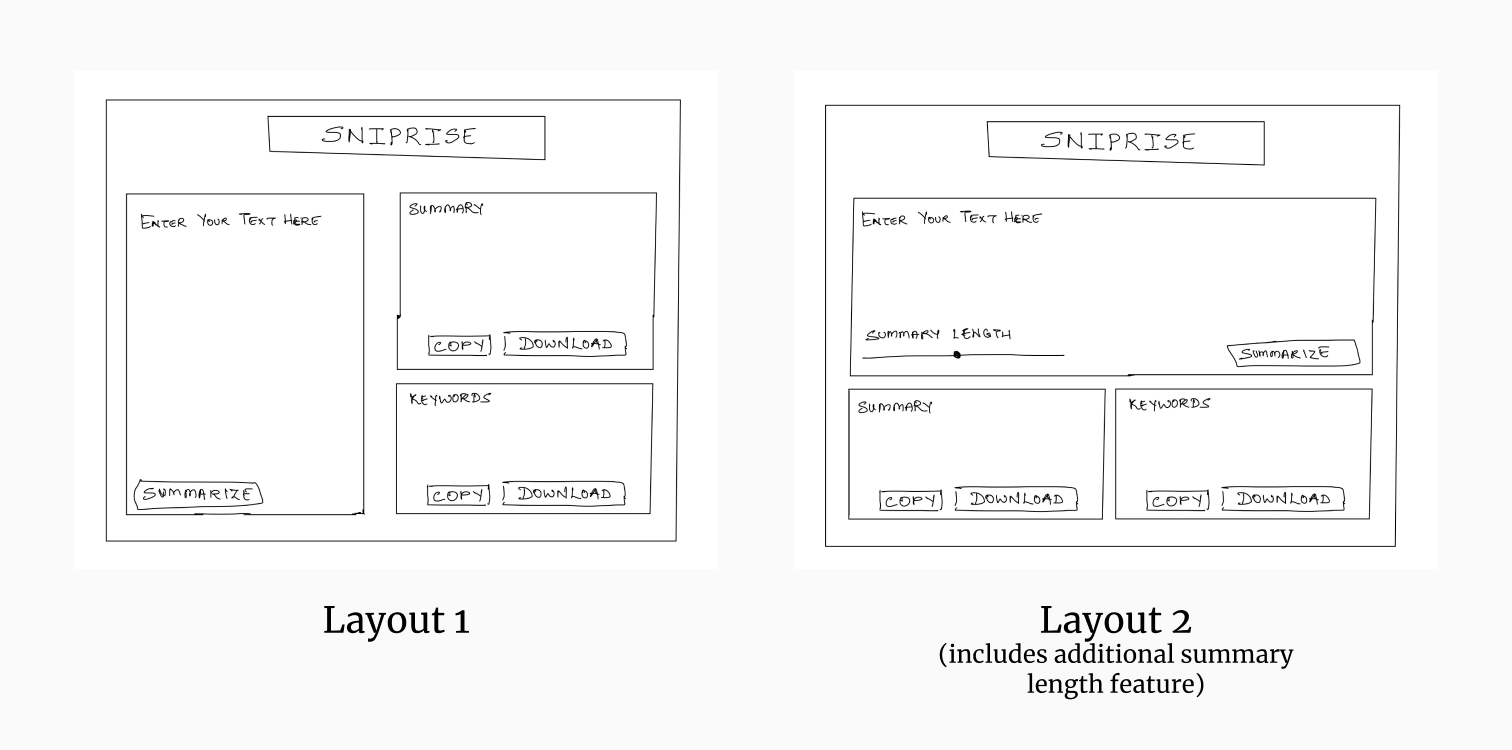
Then, I conducted a lean evaluation of this prototype with 2 participants to detect potential issues. Since they preferred the second layout and spotted no issues, we decided to use this layout as our final design. With this, I created the low-fidelity storyboard.
Final Design
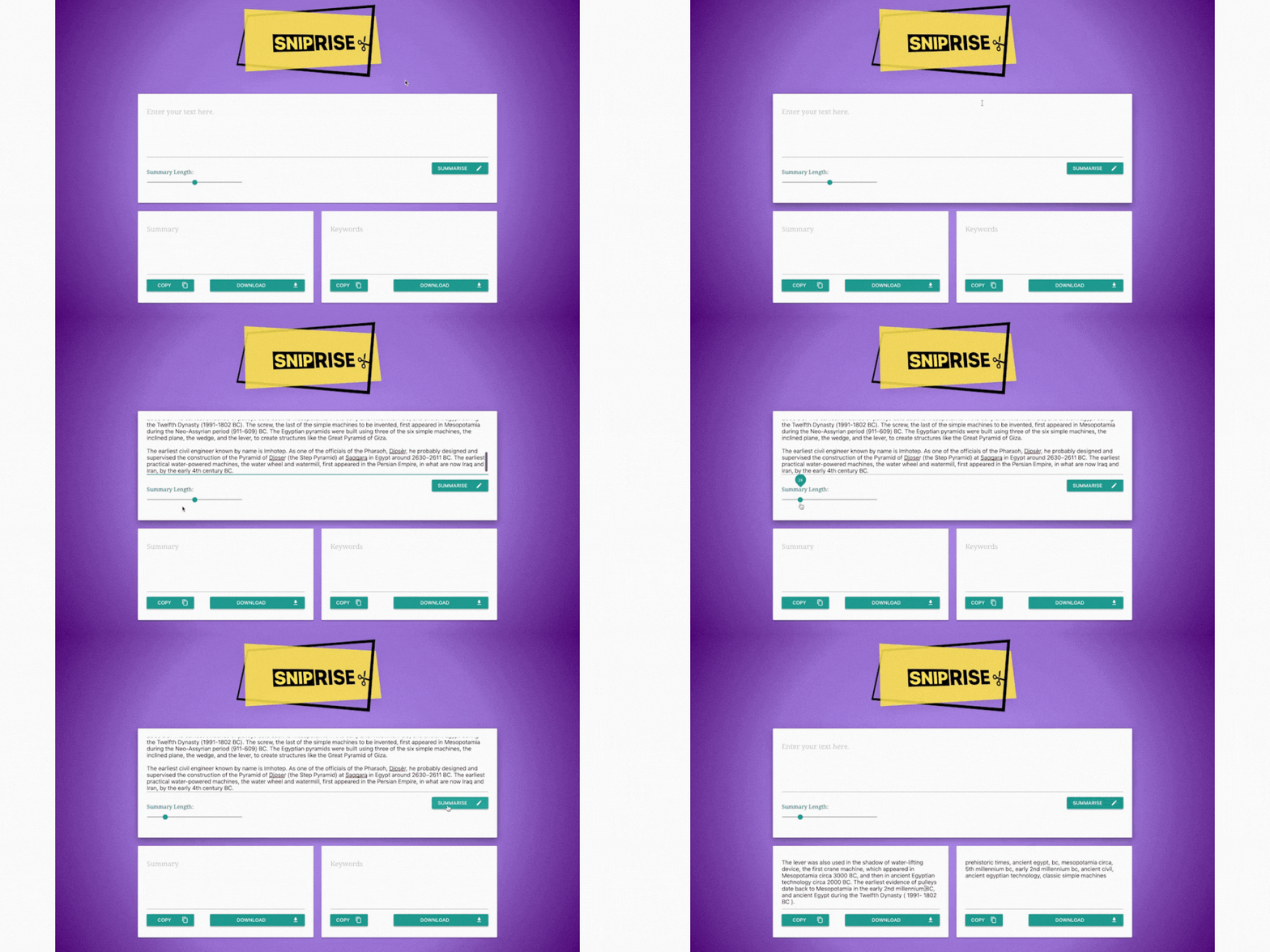
Using the storyboard above, Piyush and I created the fully functional website. I used Django to implement the TextRank program coded by my teammate and created the user interface. By using Ajax for the form submission and result display, I avoided unnecessary page refreshes and ensured the smooth running of the application. Lastly, I used CSS3 to implement a cubic-bezier curve function and make the logo interactive.
Future Steps
After submitting the project to our college, we considered the following steps to improve it.
1. Conduct Usability Testing
- To understand the usability of the software over longer periods.
- Collect participant feedback and suggestions.
2. Explore Additional Features
- Look into possible software additions so that it's not just a document summarizer.
3. Improve Mobile Responsiveness
- Ensure that users can also use the application on their phones.
Learnings
1. Research is the key to creating designs that help users.
Due to limited time, resources, and my lack of experience in UX, the user research also ended up being limited. With additional research, I could've uncovered more user needs and pain points to make SnipRise a holistic application that could help students learn in more ways than one.
2. There's no such thing as perfection.
As a person with perfectionist tendencies, I'm glad that I let go of them to start learning about UX. This project showed that I have a long way to go as a UX designer. The process I used here wasn't perfect, and the final product could've been improved so much more. However, I was proud to complete it as it marks the first step of my journey in the field.